Skip to content
PeelVillage Locksmith ServicesOpen 24/7 (289) 901-5923
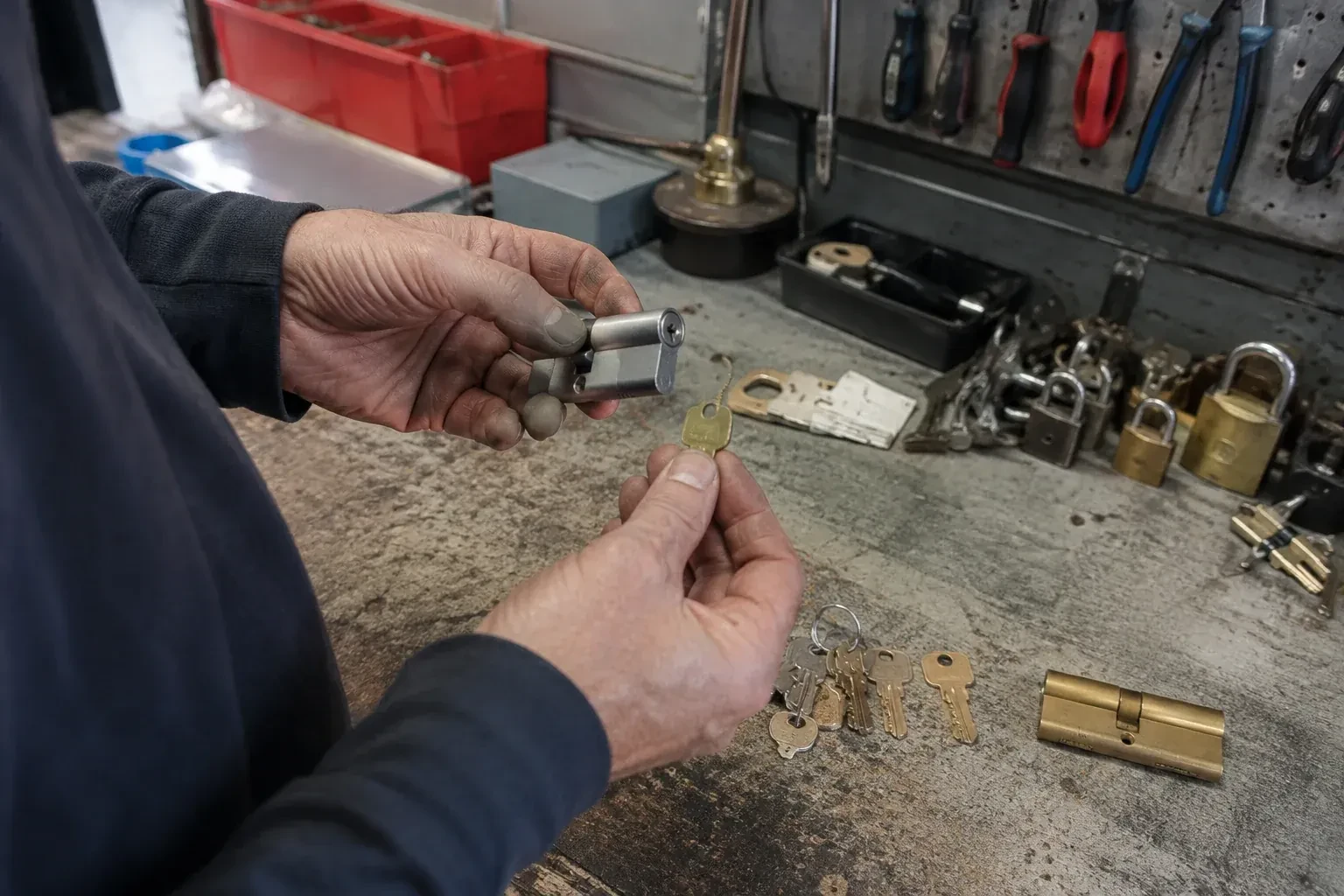
Hands holding a silver-colored lock cylinder and a brass-colored key above a workbench with padlocks, keys and tools. — Master Key System Design, Peel Village

Commercial · Peel Village

Master Key System Design

A new hire at the shop gets handed whatever spare key happens to be in the drawer, and it turns out to open the stockroom, the back office and the safe room all at once. The owner realizes nobody actually decided who should open what.

In plain words

Beyond convenience, master key system design is a security decision. It sets out who can duplicate a key, how many levels of access exist, and what scope the chart assigns to a lost key at each level, from one door up to the whole property for a top master. A restricted or patented keyway is often part of the answer, since it cuts down on copies being made anywhere other than through the record the owner controls. The result is a system where access matches role, duplication is tracked, and every missing key's designed scope is already known rather than guessed at afterward.

Sound familiar?Peel Village

The call
After a busy shift the manager counts the keys coming back in and loses track of who still has one. The walk-in cooler, the liquor cage and the office desk are all supposed to be separate, but the same battered key seems to fit two of them.
NextHow the visit goes

Master Key System Design · Peel Village

How the visit goes

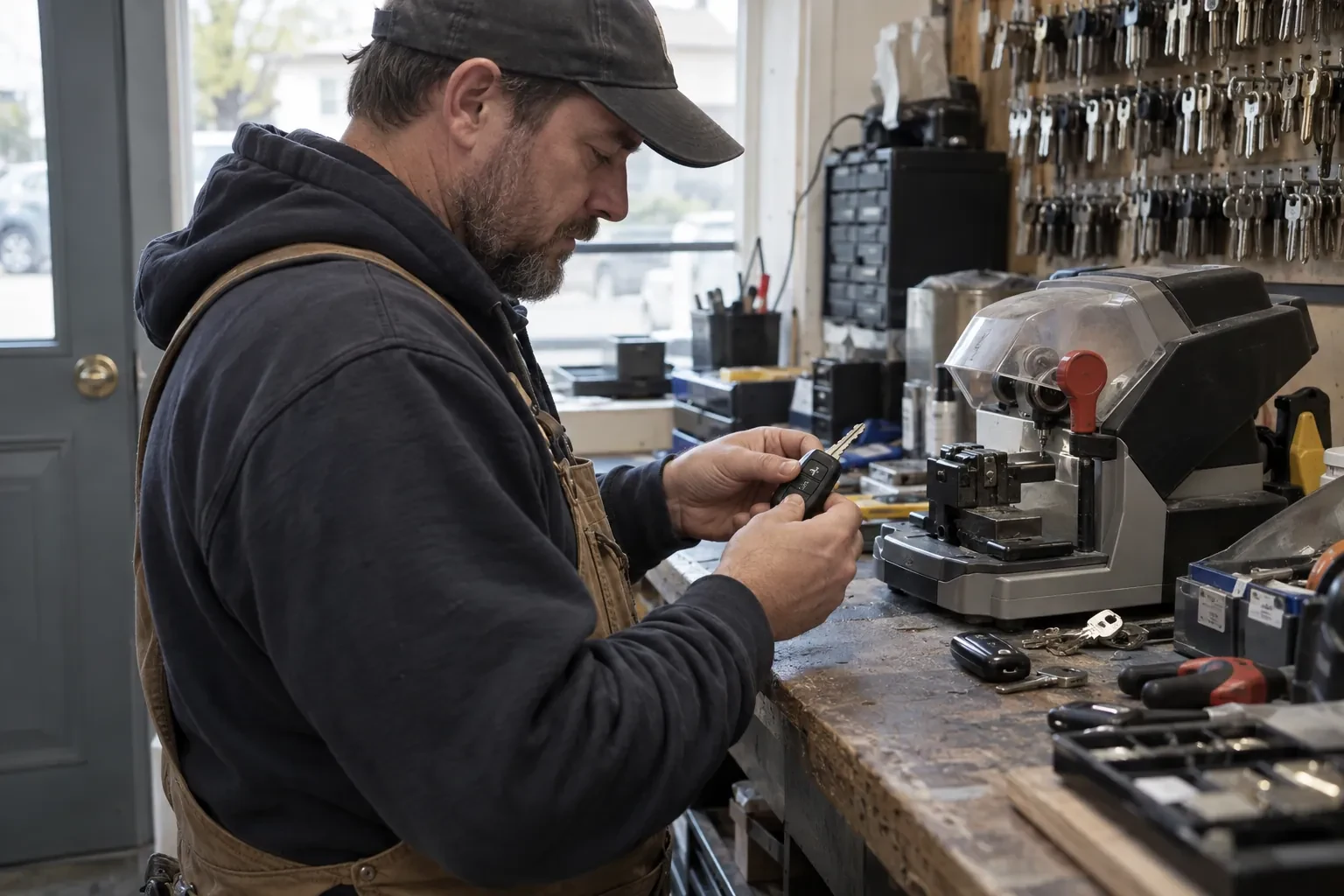
Person in an apron holding a car key fob beside a key-cutting machine, with rows of key blanks on the wall. — Peel Village
  1. Scene 1

    Duplication and how tightly it needs to be controlled

    Some businesses are comfortable with standard key blanks that any hardware counter can cut; others, especially where records, cash or controlled supplies sit behind a door, want a restricted or patented keyway that limits duplication to a record the owner controls. This is decided door by door rather than for the whole property at once, since a stockroom and a records room rarely carry the same risk. The answer shapes both the hardware chosen and how future copies of any given key will be requested and tracked going forward.

  2. Scene 2

    Choosing a platform with room in it

    The keying platform and keyway are chosen to hold every level the design calls for, plus a margin for doors that are likely to join later. Each cylinder is then pinned chamber by chamber to the planned bittings, with bottom and master pins stacked together to create the shear lines every level needs to turn that one cylinder. Getting this stacking right is what prevents a common mistake: a change key that, through an overlooked shared pin, quietly opens more than the door or keyed-alike group it was meant for.

  3. Scene 3

    A building that finally matches its own org chart

    The most visible change is often the simplest one: the level of key someone carries now matches the role they actually hold, instead of matching whatever happened to be handed down or copied over the years. Walking the building afterward, each door answers to keys that were deliberately assigned to it, and the chart in the office explains every one of those decisions to anyone who asks about it.

In the van

  • Cylinder decoders
  • Locking chart storage cabinet
  • Key marking tools
  • Cylinder pinning kit
  • Plug follower and key gauge

What shapes the quotePeel Village Locksmith Services

Administrator training and handover time
Walking the named administrator through the chart, the issuance process and how to handle a future lost key or new hire takes a defined amount of time on the day of handover, and a more detailed walkthrough for a larger, multi-level system takes longer than a simple one.
Keyway chosen: standard or restricted
A restricted or patented keyway costs more in blanks and administration than a standard keyway, since duplication is controlled through the manufacturer's authorized record rather than cut anywhere. Higher-risk doors, such as records or cash rooms, often justify that additional control; lower-risk doors may not.
Testing scope before handover
Testing every cylinder individually and then testing each master and sub-master across its full group takes time proportional to how many doors and levels exist. A larger hierarchy with more levels to verify against more doors adds to that testing time.

FeesSame any hour

Have it ready

Before you call · 0 / 3

(289) 901-5923

Frequently asked questions

How is accountability maintained when several people hold different levels of keys?

Through the chart and issuance log rather than memory. Each level is tied to named roles or people, each key is marked to reflect its level rather than the door it opens, and any change of hands is recorded with a signed receipt. That record names every authorized holder for a door, though it can only account for a key that was never copied, loaned or picked up by someone outside that list.

Should I keep spare blanks or unpinned cylinders on hand?

It depends on how the keyway is controlled. With a restricted system, spare blanks are typically held by the locksmith against the authorized record rather than stored loosely on site, since that is what keeps duplication contained. With a standard keyway, keeping a few spare cylinders of the same platform can simplify a later addition, though it is not required.

How long does designing and installing a master key system take?

It depends on the number of doors and levels involved. A small business with a handful of doors and one or two levels moves through assessment, pinning and testing in less time on site than a multi-floor property with several departments and a top-level master, where more doors, more testing and more keys to cut all add to the work involved.

Peel Villageinformation

PeelOntario

Master Key System Design · Brampton, Armbro Heights

Town
Peel Village, Peel
In business
12 years
Hours
Open 24/7
Nights, weekends and holidays, same fees
Visits
On-site assessment preferred. Request a visit or call.

2021 census: what it means at the door

Every square is one home in a hundred.

  • 23 in 100 homes · newer homes
  • About 23% of homes in Brampton were built in 1980 or earlier, according to the 2021 Census.Households in newer homes are often keen on keypads, fobs and phone-controlled locks. Standard doors make installation straightforward, and the locksmith spends more of the visit setting codes and pairing devices than on carpentry.
  • Single-detached houses make up about 53% of homes in Brampton (2021 Census).Mixed housing brings mixed hardware ages as well as types. A locksmith may rebuild a mortise lock on a semi-detached house and then set up a keypad on a townhouse door across the road, and treats each with the care its owner expects.

Source: Statistics Canada, Census Profile

Open Peel Village in Google Maps

On-site assessment

Request a visit.

A new hire at the shop gets handed whatever spare key happens to be in the drawer, and it turns out to open the stockroom, the back office and the safe room all at once.

(289) 901-5923, open 24/7.