Sound familiar?Brampton
- The call
- A software update reset the clinic's small safe overnight, and the receptionist's usual code now does nothing on a keypad that lights up but goes no further.
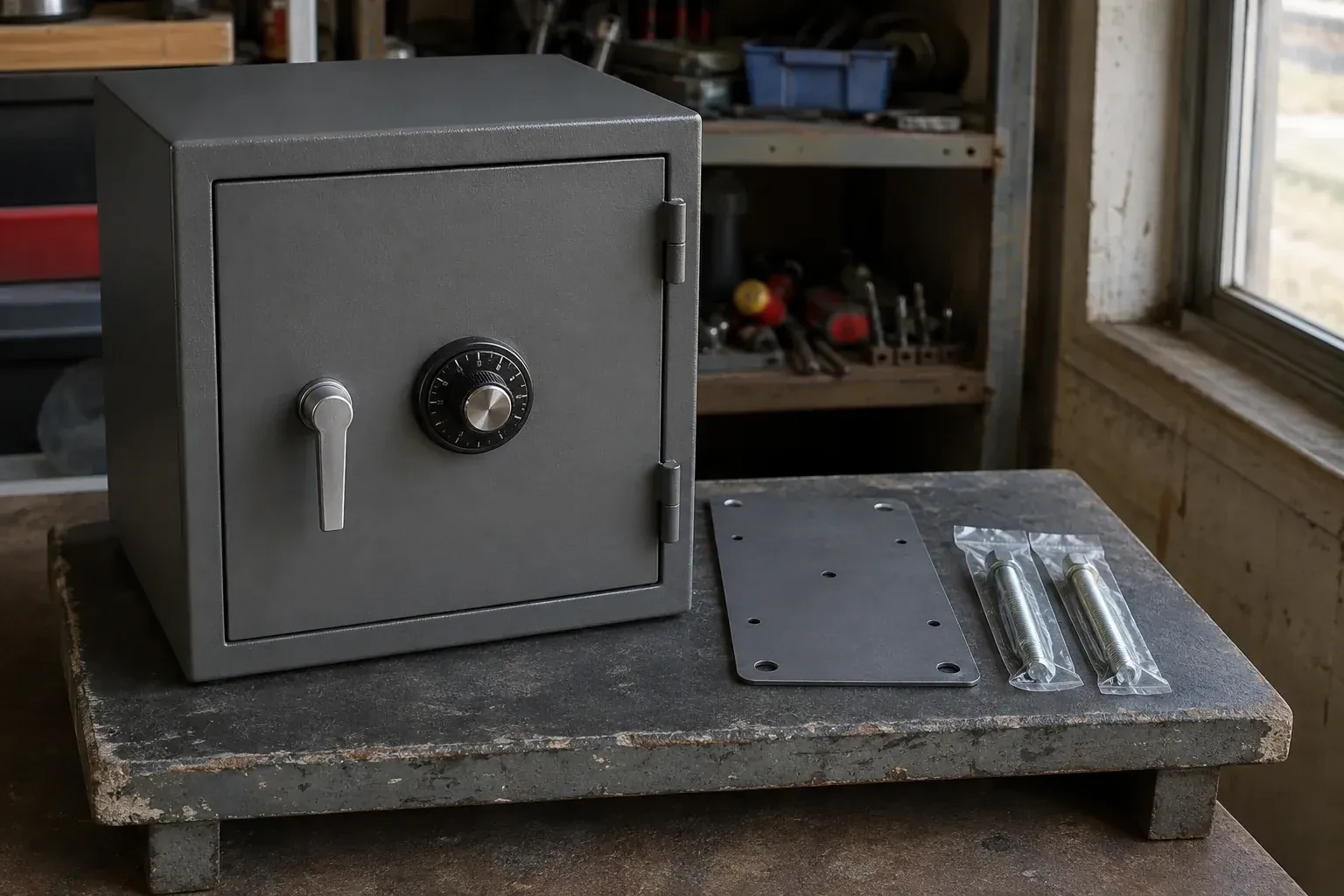
Mechanical and electronic safe locks call for genuinely different work. A mechanical dial is opened by manipulation or decoding, reading resistance through the spindle as the wheel pack lines up one wheel at a time. An electronic keypad is approached through that model's own documented recovery options first, since some keep a way back in that avoids opening the case, while others have none and a reset connection has to be made at the lock body inside the container. Knowing which lock is on the safe before arrival shapes which tools and which approach get used.
Sound familiar?Brampton
Safe Opening & Combination Change · Brampton
Scene 1
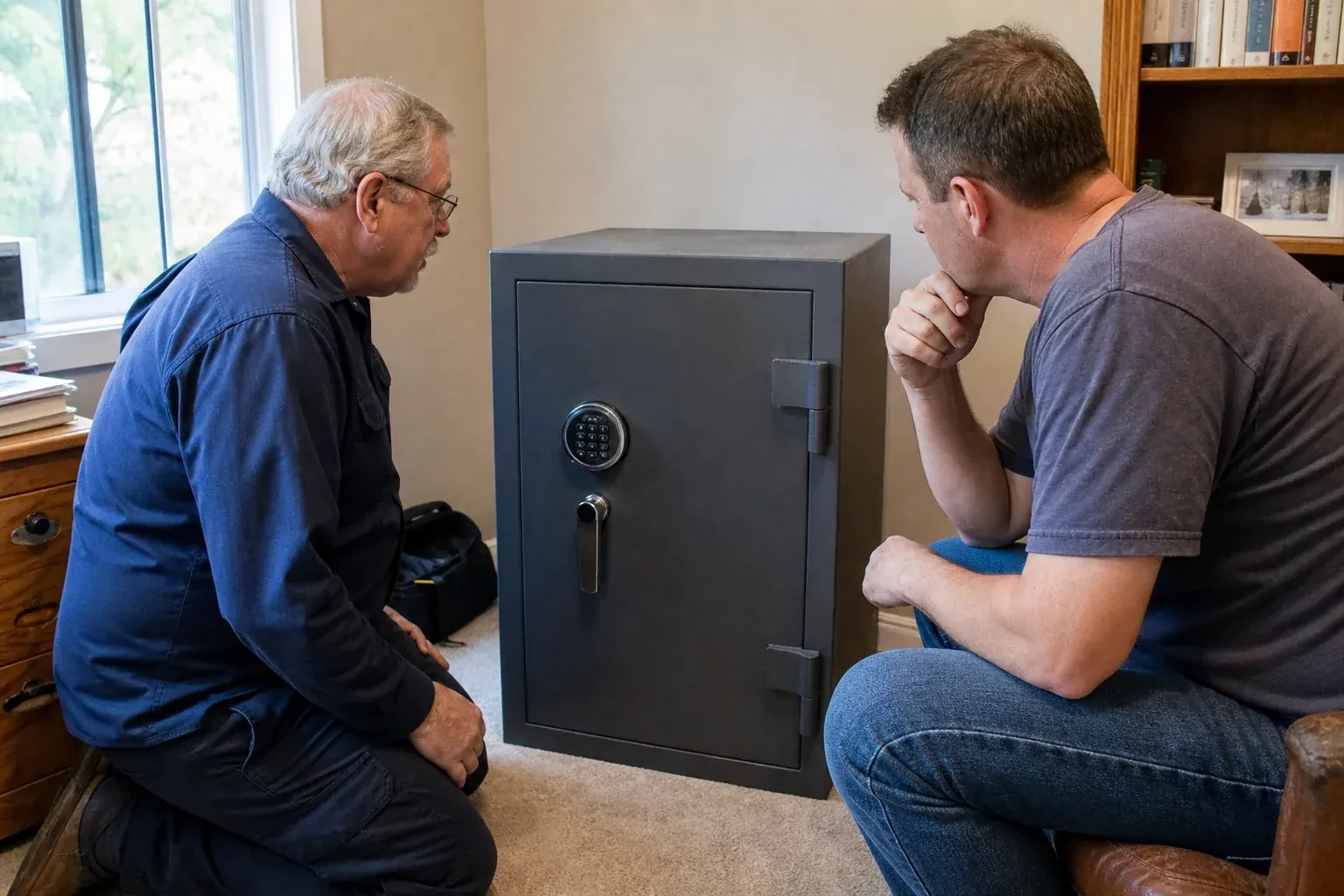
Before any tool touches the safe, the locksmith establishes who has the right to be inside it. For a business this is usually straightforward: an owner, manager or authorized employee identifies themselves and their connection to the account. For an estate, a secondhand purchase or a change of ownership, proof such as a bill of sale, a property transfer or an executor's documentation fills the same role. This step is treated as routine good practice rather than an obstacle, because it protects the current owner from a later dispute over who authorized access to a safe's contents just as much as it protects anyone else with an interest in it.
Scene 2
A dial lock is read through the spindle rather than forced through it. The locksmith applies light, even tension and turns the dial slowly, feeling for the small changes in resistance that mark each wheel of the wheel pack falling into place, or uses a decoding tool built for that lock family to read the gate positions directly. Wear matters here: an older, well-used dial often gives clearer feedback than a newer one, while a dial that has drifted out of alignment over years of use may need the wheel pack itself adjusted once the door is open. Nothing about this process involves force on the dial or handle.
Scene 3
The visit finishes with the door cycled several times under the new combination, both open and closed, so the result is proven rather than assumed. The handle is checked for smooth, even movement, and the bolt work is watched to confirm it retracts and extends fully on each attempt. Anything noticed along the way, a stiff dial, a keypad that needs a firmer press, or a hinge that could use attention, is pointed out plainly so nothing is left as a surprise. You are shown the working combination yourself before the locksmith leaves, rather than simply being told that it works.
What shapes the quotePeel Village Locksmith Services
FeesSame any hour
Yes, and it is meant as a protection rather than a hurdle. For a business, identifying yourself as the owner, manager or an authorized employee is usually enough. For an estate, a secondhand purchase or a change of ownership, a bill of sale, transfer document or executor's paperwork fills the same role. This step protects whoever actually has a claim on what is inside the safe, which includes you.
There is no fixed schedule; the sensible trigger is a change in who knows it, such as an employee or manager leaving, rather than a set number of months or years. A combination that has only ever been known to current staff generally does not need changing on a routine basis, since the lock itself does not wear out from correct use the way a mechanical part might.
Often, yes, particularly for a mechanical lock, where a worn wheel pack, drive cam or spindle can be replaced individually within the existing lock body. An electronic lock's circuit board and keypad are less often repairable in place and are more commonly swapped for a comparable or higher-rated replacement unit that fits the same cutout.
PeelOntario
Safe Opening & Combination Change · Armbro Heights, Peel Village
Every square is one home in a hundred.
On-site assessment
The pharmacy's drop safe has a keypad that finally lost power for good, and the little override key that was supposed to live behind the counter cannot be found anywhere.
(289) 901-5923, open 24/7.
On-site assessment preferred · (289) 901-5923, open 24/7